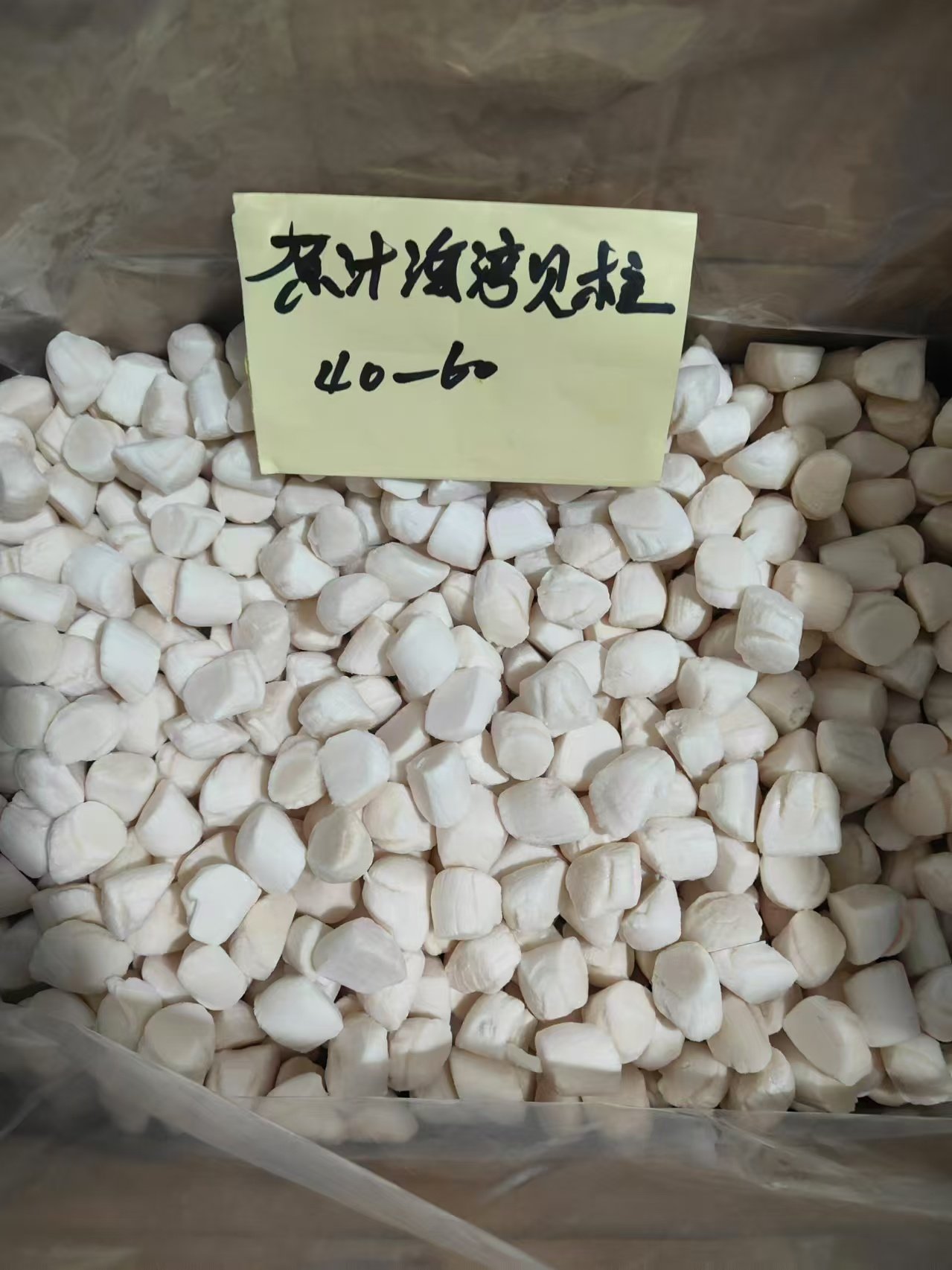
Helping you import competitive Frozen Bay Scallop
Bay Scallop Material Price Trend
Updated on 10th October 2025: Global bay scallop raw material prices showed a steady upward trend in 2024-2025, driven by strong demand from the North American and European catering sectors. Chinese coastal farms see an average price increase of 4-6% compared to 2023, while US supplies remain stable due to improved farming efficiency. Japanese premium bay scallop prices stay high (15-20% higher than Chinese products) due to strict quality control.
All About Bay Scallop
s1. Background
Bay scallop, scientifically named Argopecten irradians (belonging to the Pectinidae family), is a high-value marine bivalve renowned for its sweet, tender flesh and rich nutritional value. It is naturally distributed in the temperate and subtropical coastal waters of the Western Atlantic (eastern USA, Gulf of Mexico) and has been introduced to Asia for aquaculture since the 1980s.
Traditionally, bay scallop was mainly wild-caught, but overfishing and growing market demand promoted large-scale aquaculture. China successfully introduced the species from the USA in 1982, and after 40 years of development, it has become the world’s largest producer. Aquaculture now accounts for over 95% of global bay scallop supply, with artificial seedling and intensive farming technologies leading the industry.
2. Key Facts & Figures
- Exported to more than 90 countries and territories worldwide, with an annual global trade value of around USD 800 million.
- Ranked top 3 most popular scallop species in the global seafood market (after sea scallop and king scallop).
- China accounts for 70% of global bay scallop production, making it the dominant supplier for international markets.
- No health risks: Scientific tests show bay scallop has extremely low heavy metal and pollutant residues, well below international MRLs (Maximum Residue Limits).
- Environmentally friendly: As filter feeders, bay scallops purify 50-80 liters of seawater per day, contributing to marine ecosystem balance.
3. Main Producer Countries
According to FAO Fishery Statistics 2023, the top global bay scallop producers are:
- China: Annual output ~600,000 tonnes (70% of global production), concentrated in Shandong (Penglai, Yantai), Liaoning (Dalian, Huludao), and Hebei (Qinhuangdao).
- USA: Annual output ~120,000 tonnes (14% of global production), mainly from Massachusetts Bay and Chesapeake Bay.
- Japan: Annual output ~50,000 tonnes (6% of global production), focused on Hokkaido and Sanriku coastal areas.
- South Korea: Annual output ~30,000 tonnes (4% of global production), primarily from South Jeolla and South Gyeongsang provinces.
- Others: Canada, Australia, and New Zealand, with a combined annual output of ~40,000 tonnes (6% of global production), mainly supplying domestic and regional markets.
4. Habitat and Biology
- Distribution: Naturally inhabits shallow coastal waters (depth 5-20 meters) with sandy or muddy-sandy seabeds, preferring water temperatures of 10-25°C and salinity of 23-32‰. It cannot tolerate low salinity (<18‰) or extreme temperatures (>30°C/<-2°C).
- Morphological Features: Round shell with a diameter of 5-8 cm (commercial size), shell color varies from light brown to yellowish-brown with radial ribs. The adductor muscle (edible part) is white, plump, and elastic, accounting for 15-20% of the total weight.
- Feeding Habits: Filter feeder, mainly consuming phytoplankton (diatoms, dinoflagellates), zooplankton, and organic detritus. No artificial feed is required for traditional aquaculture, making it environmentally sustainable.
- Reproductive Characteristics: Sexual maturity is reached at 6-8 months of age (shell diameter >4 cm). It is a hermaphrodite (protandrous), spawning twice a year (May-June and September-October) in natural conditions. A mature individual can release 3-5 million eggs per spawn.
5. Scientific and Commercial Names
| Category | Details |
|---|---|
| Scientific Name | Argopecten irradians (Lamarck, 1819) |
| Synonyms | Pecten irradians, Aequipecten irradians |
| Common English Names | Bay Scallop, Atlantic Bay Scallop, Irradiated Scallop |
| Regional Common Names | – China: 海湾扇贝 (Hǎiwān Shànbèi) – Japan: ベイスカロップ (Bei Sukaroppu) – South Korea: 베이스캘럽 (Beiseukaelleop) – USA: Cape Cod Scallop (local term) |
6. Aquaculture Development History
- 1980s: USA dominates wild bay scallop fishing, but overfishing leads to stock decline. China introduces A. irradians from Massachusetts (USA) in 1982 for aquaculture trials.
- 1990s: China succeeds in artificial seedling and raft culture technology, bay scallop production expands rapidly to 100,000 tonnes/year. USA and Japan start commercial aquaculture.
- 2000s: China develops bottom-sowing and integrated multi-trophic aquaculture (IMTA) models, improving product quality and environmental sustainability.
- 2010s-present: Global bay scallop aquaculture shifts to intensive, standardized production. China promotes “green farming” certification; USA and Japan focus on premium market segments with organic and traceable products.
7. Core Cultivation Regions
- China:
- Shandong: Penglai, Yantai (raft culture annual output ~250,000 tonnes, 42% of national production)
- Liaoning: Dalian, Huludao (bottom-sowing culture, annual output ~180,000 tonnes, 30% of national production)
- Hebei: Qinhuangdao (factory seedling production, supporting 20% of national farming demand)
- USA: Massachusetts Bay (suspended culture), Chesapeake Bay (restoration-oriented farming)
- Japan: Hokkaido (cold-water culture, premium product), Sanriku Coast (disaster-resilient farming systems)
8. Nutritional Value
| Nutrient Index | 100g Edible Portion (Frozen Adductor Muscle) |
|---|---|
| Calories | 86 kcal |
| Calories from Fat | 12 kcal |
| Total Fat | 1.3g |
| Saturated Fat | 0.3g |
| Cholesterol | 58mg |
| Sodium | 230mg |
| Total Protein | 17.2g |
| Carbohydrates | 2.1g |
| Dietary Fiber | 0g |
| Trace Elements | Calcium (38mg/100g), Phosphorus (165mg/100g), Iron (1.2mg/100g), Selenium (21μg/100g) |
| Fatty Acids | DHA (0.15g/100g), EPA (0.12g/100g) |
Note: Bay scallop is low in fat, high in high-quality protein and essential trace elements, suitable for weight management, cardiovascular health, and child development.
9. Main Product Types
Bay scallop is processed into diverse products to meet global market demands:
- Frozen Whole Scallop: In-shell, IQF/BQF, gutted/ungutted, suitable for retail and catering (steaming, boiling).
- Frozen Adductor Muscle: Shell-off, IQF, graded by size (10-20pc to 40-50pc/500g), the most popular export product for restaurants and food processing.
- Half-Shell Scallop: IQF, glazed (5-8% ice coating), ready for grilling/baking, popular in North American and European retail markets.
- Value-added Products: Breaded scallop (panko/beer batter), marinated scallop (soy sauce/garlic/lemon flavor), scallop surimi, and canned scallop (for Southeast Asian convenience stores).
10. Global Market and Trade
- Export Coverage: Bay scallop products are exported to over 90 countries and territories across 5 continents, including:
- North America: USA, Canada (prefer half-shell and breaded scallop)
- EU: Spain, France, Germany (demand for frozen adductor muscle and ready-to-cook products)
- Asia: Japan, South Korea, Singapore (high-quality frozen whole scallop and marinated products)
- Middle East: UAE, Saudi Arabia (catering-focused frozen scallop muscle)
- Oceania: Australia, New Zealand (premium organic bay scallop)
- Trade Trends (2021-2023):
- 2021: Global trade volume reached 280,000 tonnes, valued at USD 680 million; China accounted for 65% of exports (mainly to USA and EU).
- 2022: Trade volume dropped by 7% to 260,000 tonnes due to global logistics disruptions; US domestic production increased by 12% to fill supply gaps.
- 2023: Trade volume rebounded to 310,000 tonnes, valued at USD 800 million; demand for ready-to-eat and organic bay scallop products grew by 18% year-on-year.
11. Aquaculture Technology
Production Cycle
- Seedling Rearing: Collect wild or artificial spawned eggs, incubate in indoor tanks (water temperature 18-22°C, salinity 28-30‰), hatch into larvae in 24-36 hours.
- Intermediate Cultivation: Transfer larvae to outdoor nursery ponds or floating cages, grow to 1-2 cm shell diameter (juveniles) in 30-40 days, fed natural plankton.
- Grow-out: Stock juveniles in raft cages (density 50-80 individuals/m²) or bottom-sown areas (100-150 individuals/m²), grow to commercial size (5-8 cm) in 6-8 months.
- Harvest: Collect by lifting cages (raft) or dredging (bottom-sown) from October to December; sort by size, clean, and freeze within 2 hours to preserve freshness.
Main Cultivation Modes
| Mode | Features | Yield |
|---|---|---|
| Raft Culture | Floating rafts in shallow seas, easy management, high survival rate; suitable for large-scale production | 15-20 tonnes/ha/crop |
| Bottom-sowing Culture | Juveniles sown on sandy seabeds, natural growth environment, premium product quality | 8-12 tonnes/ha/crop |
| Industrial Recirculating System | Indoor controlled environment, year-round production, high investment but stable output | 30-40 kg/m³/year |
Water Quality Management
- Key Parameters: Temperature 10-25°C, salinity 23-32‰, dissolved oxygen ≥5 mg/L, pH 7.8-8.6.
- Monitoring Frequency: Daily testing of temperature, salinity, and DO; weekly testing of ammonia nitrogen and nitrite.
- Environmental Protection: Raft culture areas are rotated every 2-3 years to avoid seabed degradation; IMTA models combine scallops with seaweed and shellfish to balance ecosystem.
12. Quality Standards and Certification
National Regulations
- China: GB/T 2733-2022 《Fresh and Frozen Aquatic Products》, SC/T 3110-2019 《Bay Scallop Aquaculture Technical Specifications》
- USA: FDA Seafood HACCP Regulations, NOAA Fisheries Quality Standards
- Japan: JAS (Japanese Agricultural Standard) for Frozen Scallops
International Certifications
- GlobalGAP: Covers environmental protection, food safety, and traceability; required for entry into EU retail markets.
- ASC (Aquaculture Stewardship Council): Focuses on sustainable aquaculture; certified products account for 12% of global bay scallop exports.
- Organic Certification: EU Organic, USDA Organic, JAS Organic; premium products with 30-50% price premium.
13. Sustainable Aquaculture Practices
- Environmental Protection:
- Promote IMTA systems: Bay scallops (filter feeders) + seaweed (absorb nutrients) + abalone (grazer) to reduce environmental impact.
- Control farming density: Avoid overstocking to prevent water quality deterioration and disease outbreaks.
- Chemical and Drug Management:
- Banned substances: Antibiotics (chloramphenicol, nitrofuran), heavy metals, and synthetic pesticides (in line with EU and FDA standards).
- Allowable treatments: Natural disinfectants (hydrogen peroxide) and mineral supplements (calcium carbonate) with mandatory withdrawal periods.
- Organic Aquaculture Cases:
- China’s Shandong Penglai Organic Bay Scallop Farm: Certified by EU Organic, uses natural seawater and plankton, exports to Germany and France.
- USA’s Massachusetts Organic Scallop Project: Restores wild habitats through sustainable farming, supplies premium restaurants in New York and Boston.
14. Processing and Quality Control
- Processing Flow: Harvest → Cleaning (removing sand and debris) → Sorting (by size) → Gutting (optional) → Quick Freezing (IQF/-40°C) → Glazing (5-8% ice coating) → Vacuum Packaging → Storage (-18°C).
- Hygiene Standards: Processing plants comply with HACCP, ISO 22000, and BRCGS standards; regular inspections by third-party agencies (SGS, Intertek).
- Traceability System: Each batch is labeled with farm code, harvest date, processing plant, and expiration date; traceable through online platforms.
15. Market Advantage Comparison
Compared with other scallop species (sea scallop, king scallop, Yesso scallop), bay scallop has the following core advantages:
- Taste: Sweet, tender, and juicy flesh with no fishy odor; suitable for multiple cooking methods (steaming, grilling, frying, sashimi).
- Cost: Lower farming costs (filter feeder, no artificial feed) than Yesso scallop; 20-30% cheaper than sea scallop in the retail market.
- Supply Stability: Short growth cycle (6-8 months) vs. 18-24 months for king scallop; year-round supply with no seasonal shortages.
- Nutrition: Higher protein content than sea scallop, richer in selenium and DHA than zhikong scallop.