
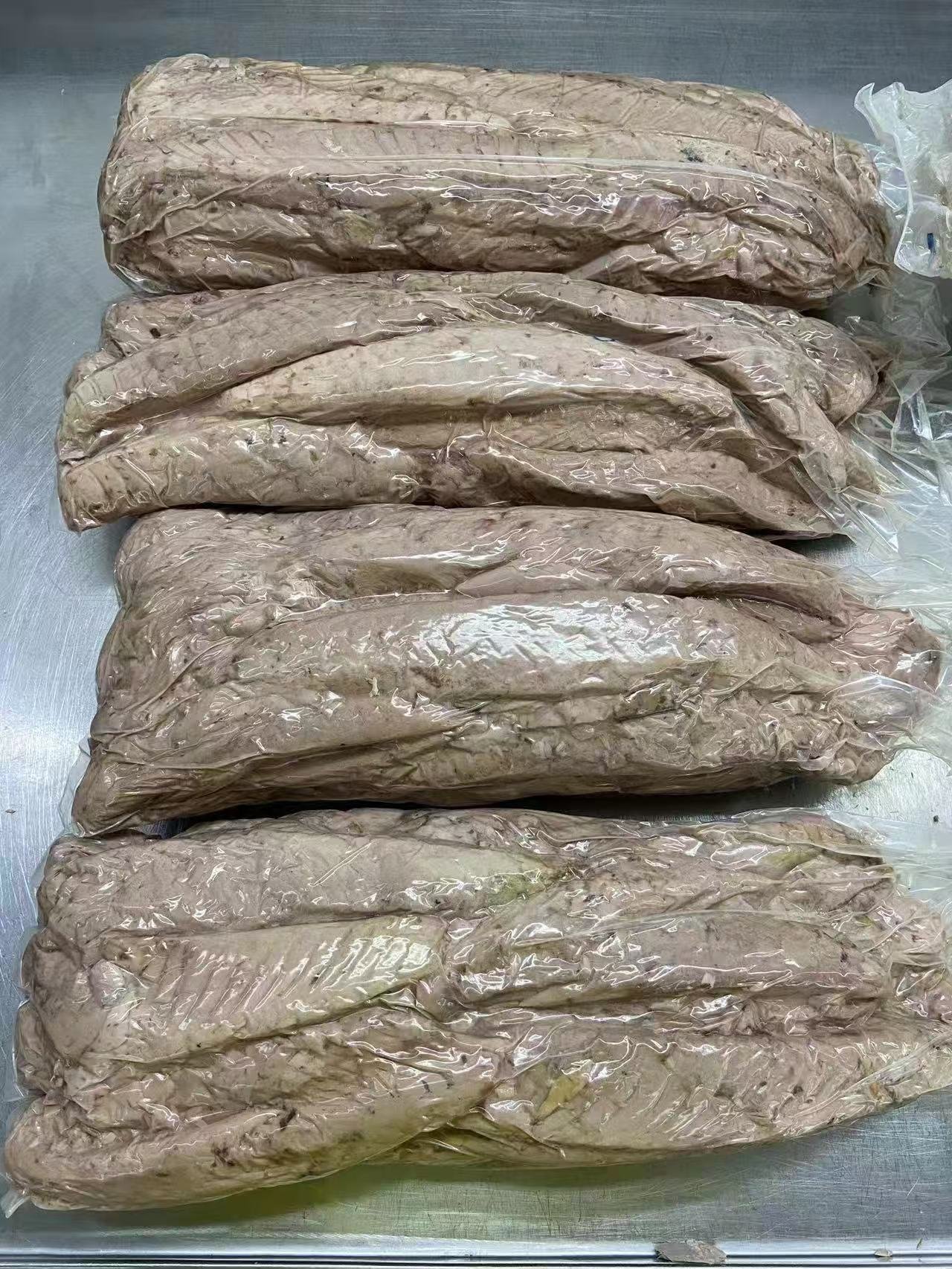
Helping you import competitive Frozen Tuna
Overview of Tuna Import & Export(Q1 2026)
Part 1 Import Performance
Overall Import Trend
China’s tuna imports contracted notably in Q1 2026. The total import volume reached 4,518.71 metric tons, a year-on-year drop of 46%. Driven by rising prices and adjusted product, total import value stood at 27.6505 million US dollars, down merely 3% year on year.
Monthly data shows a remarkable recovery in March. The import volume hit 2,852.46 metric tons, surging 33% year on year; import value was 10.4737 million US dollars, up 6% year on year. Compared with February, import volume rose 264% month on month, and import value increased 30% month on month.
Import Product Categories (March)
In terms of value, major imported tuna products in March included bluefin tuna, skipjack tuna, frozen tuna fillets, processed tuna products and frozen yellowfin tuna.
- Fresh/chilled Atlantic & Pacific bluefin tuna (HS 030235): 115.72 metric tons (+14% YoY), valued at 3.4370 million US dollars (+18% YoY). Average unit price: 29.70 US dollars per kg (+4.13% YoY), accounting for 33% of total import value.
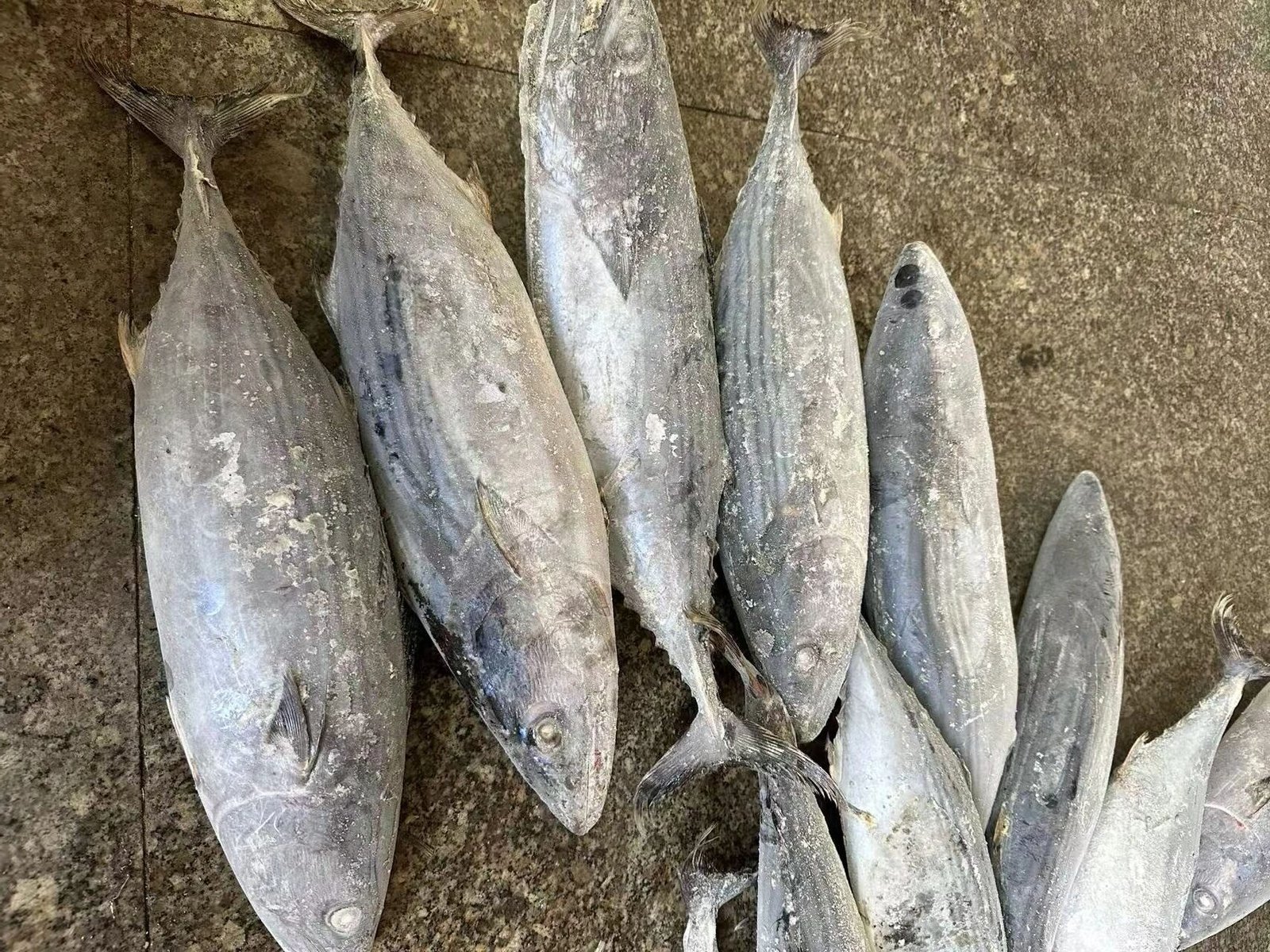
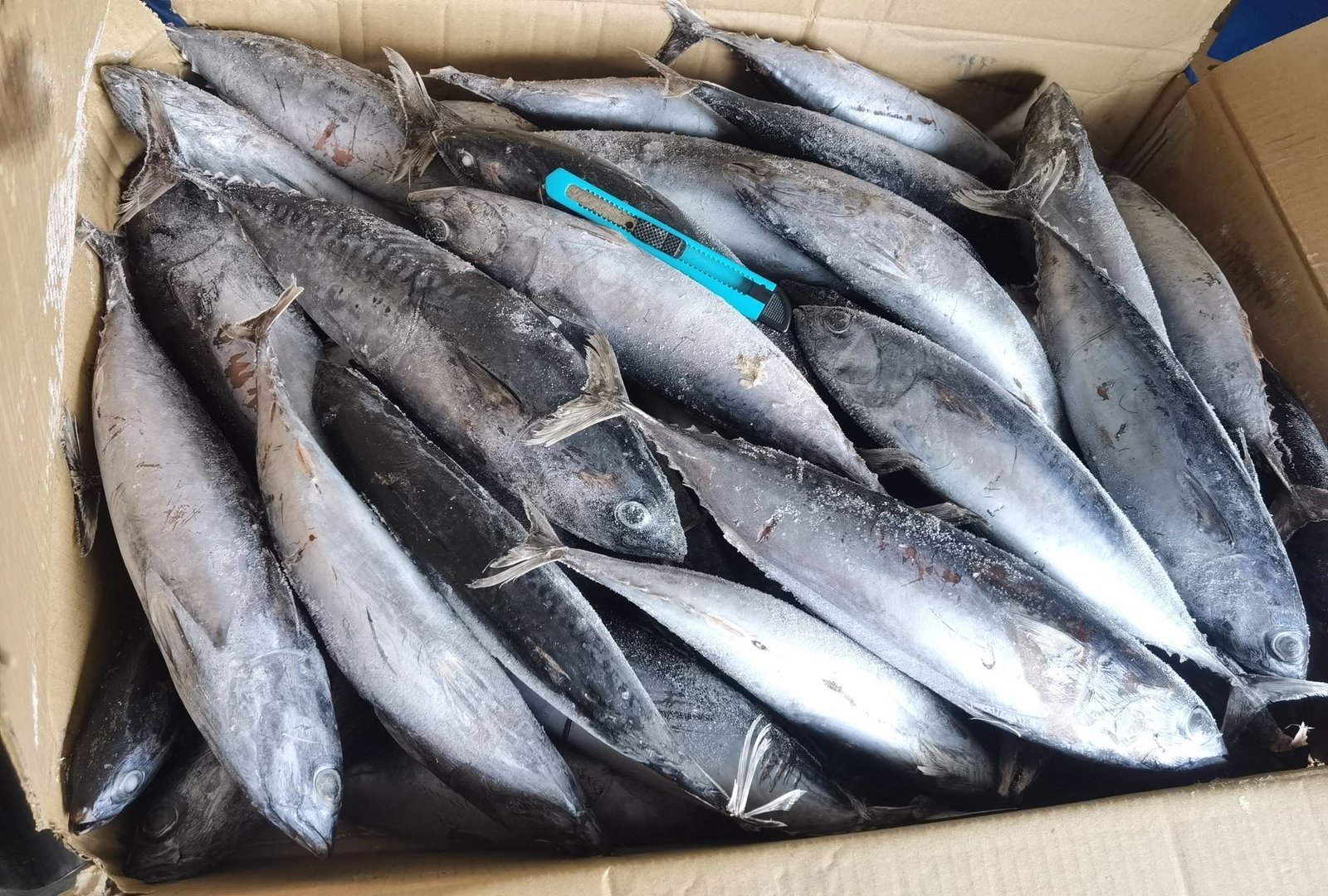
- Frozen skipjack tuna (HS 030343): 1,730.84 metric tons (+5% YoY), valued at 2.6170 million US dollars (+14% YoY). Average unit price: 1.51 US dollars per kg (+9% YoY), taking 25% of total import value.
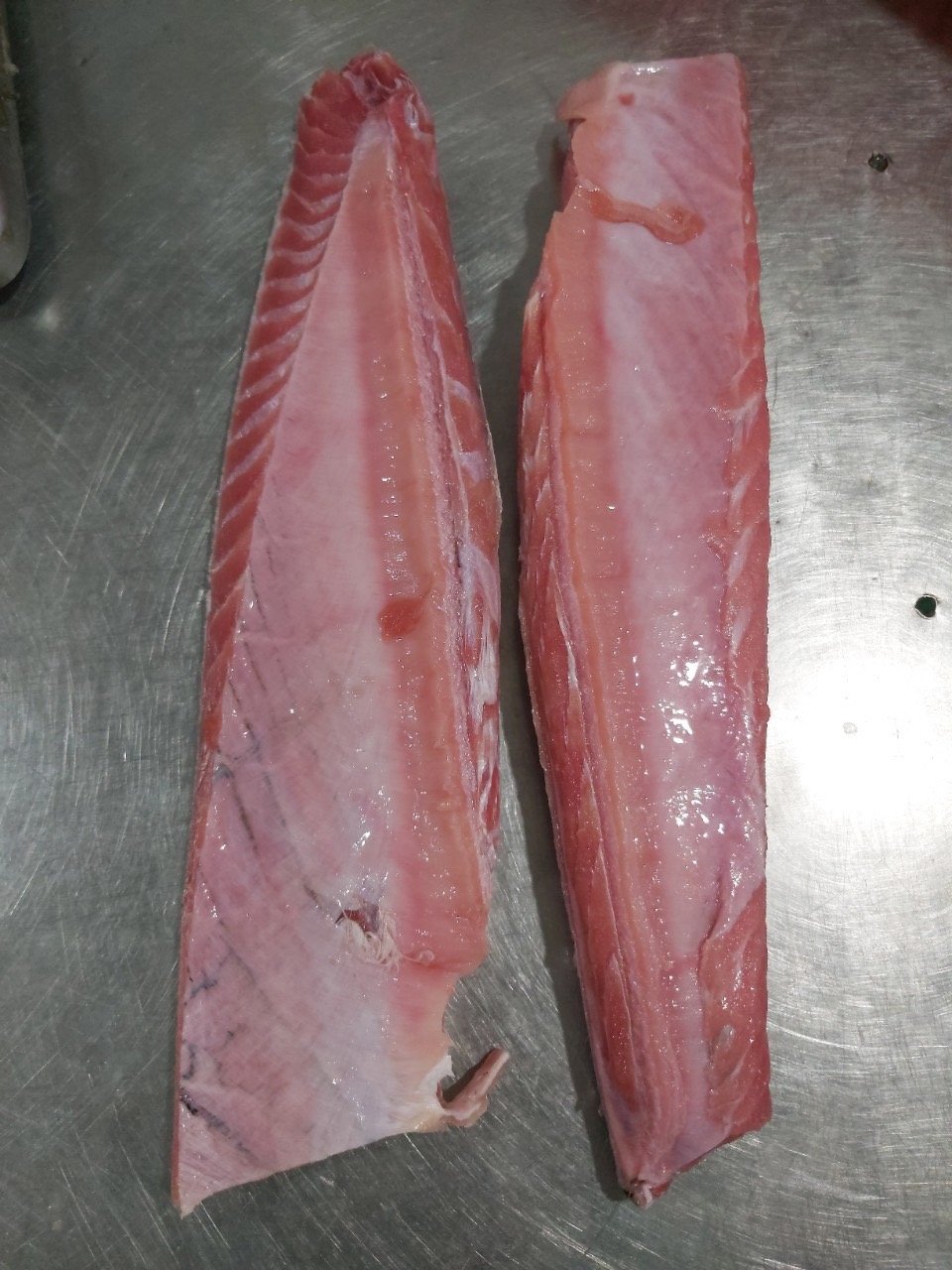
- Frozen tuna fillets (HS 030487): Recorded a nearly doubled growth at 116.62 metric tons (+99% YoY), valued at 2.2884 million US dollars (+78% YoY). Average unit price: 19.62 US dollars per kg (-11% YoY), occupying 22% of total import value.
- Frozen yellowfin tuna: 721.30 metric tons, valued at 1.1296 million US dollars. Average unit price: 1.57 US dollars per kg, accounting for 11% of total import value, with a sharp volume increase month on month.
Major Import Sources (March)
The top five import sources were Spain, the Marshall Islands, the Federated States of Micronesia, Turkey and Morocco.
- Spain: 113.28 metric tons of tuna products worth 3.2974 million US dollars, 31% of total import value. Main product: fresh/chilled Atlantic bluefin tuna (HS 030235: 108.48 metric tons, 3.2410 million US dollars).
- Marshall Islands: 1,065.00 metric tons valued at 1.6180 million US dollars, 15% of total import value. Main products: frozen skipjack tuna (HS 030343: 830 metric tons, 1.2529 million US dollars) and frozen yellowfin tuna (HS 030342: 235 metric tons, 0.3652 million US dollars).
- Federated States of Micronesia: 950.00 metric tons valued at 1.4414 million US dollars, 14% of total import value. Main products: frozen skipjack tuna (HS 030343: 785 metric tons, 1.1850 million US dollars) and frozen yellowfin tuna (HS 030342: 165 metric tons, 0.2564 million US dollars).
Major Import Provinces
The top five provinces by import volume: Shandong, Liaoning, Shanghai, Guangdong and Fujian.
Part 2 Export Performance
Overall Export Trend
China’s tuna exports saw a mild decline in Q1 2026. Total export value reached 282 million US dollars, down 6% year on year; total export volume was 65,900 metric tons, a slight increase of 0.41% year on year.
March witnessed a notable year-on-year drop in exports. Export volume stood at 22,500 metric tons (-11% YoY), and export value was 91.6050 million US dollars (-21% YoY). Month on month, export volume and value rose 49% and 40% respectively.
Export Product Categories (March)
Major export products were processed tuna products and frozen tuna fillets.
- Processed tuna products (HS 160414): The leading export category. Volume: 16,000 metric tons (+5% YoY); value: 63.1944 million US dollars (-19% YoY). Average unit price: 3.95 US dollars per kg (-23% YoY), accounting for 69% of total export value.
- Frozen tuna fillets (HS 030487): 2,236.26 metric tons (-15% YoY), valued at 17.1791 million US dollars (-9% YoY). Average unit price: 7.68 US dollars per kg (+7.4% YoY), taking 19% of total export value.
Major Export Destinations (March)
Tuna products were exported to over 60 countries and regions. The top five markets were Thailand, Japan, Algeria, Vietnam and Mexico.
- Thailand: 6,519.35 metric tons valued at 24.0141 million US dollars, 26% of total export value. Main products: processed tuna products (HS 160414: 4,902.45 metric tons, 20.6333 million US dollars) and frozen albacore tuna (HS 030341: 695.66 metric tons, 2.0852 million US dollars).
- Japan: 2,527.70 metric tons valued at 18.6926 million US dollars, 20% of total export value. Main products: frozen tuna fillets (HS 030487: 1,866.16 metric tons, 15.0799 million US dollars) and frozen bigeye tuna (HS 030344: 181.51 metric tons, 1.3575 million US dollars).
- Algeria: 3,404.25 metric tons valued at 11.8287 million US dollars, 13% of total export value. Main product: processed tuna products (HS 160414).
Major Export Provinces
The top five provinces by export volume: Zhejiang, Fujian, Shandong, Liaoning and Hainan
All About Tuna
1. Product Overview
Origin & Featured Advantages
- Japan (Pacific bluefin tuna): Core area – Okinawa, Hokkaido; advantage – premium sashimi-grade (Otoro/Chutoro), high fat content (20-25%), strict freshness control (K value ≤8%).
- Spain (Atlantic bluefin tuna): Core area – Mediterranean coast (Barcelona); advantage – large-size loins (30-50kg), advanced longline fishing, EU-compliant processing.
- USA (bigeye/yellowfin tuna): Core area – Hawaii, California; advantage – low mercury (≤0.3mg/kg), sustainable fishing (MSC-certified), targeting high-end restaurant markets.
- Ecuador (yellowfin tuna): Core area – Galápagos waters; advantage – fast growth (18-month market size), high meat yield (65%), cost-effective for canned/loin products.
- Indonesia (skipjack tuna): Core area – Maluku, Sulawesi; advantage – year-round supply, low price (USD 8-10/kg), 70% used for canned tuna (global top 1 skipjack exporter).
- Thailand (mixed tuna processing): Core area – Bangkok, Samut Sakhon; advantage – integrated processing (canned, seasoned tuna), Halal certification, supplying Middle East/ASEAN markets.
- Vietnam (yellowfin/skipjack tuna): Core area – Nha Trang, Da Nang; advantage – small-scale pole-and-line fishing (low bycatch), flexible order support (100-500kg batches), EU/US market access.
- China (skipjack/yellowfin tuna): Core area – Zhoushan, Xiamen; advantage – large-scale purse seine fleets, domestic processing clusters, cost-effective frozen whole fish (20-30kg) for Asian markets.
Processed Products
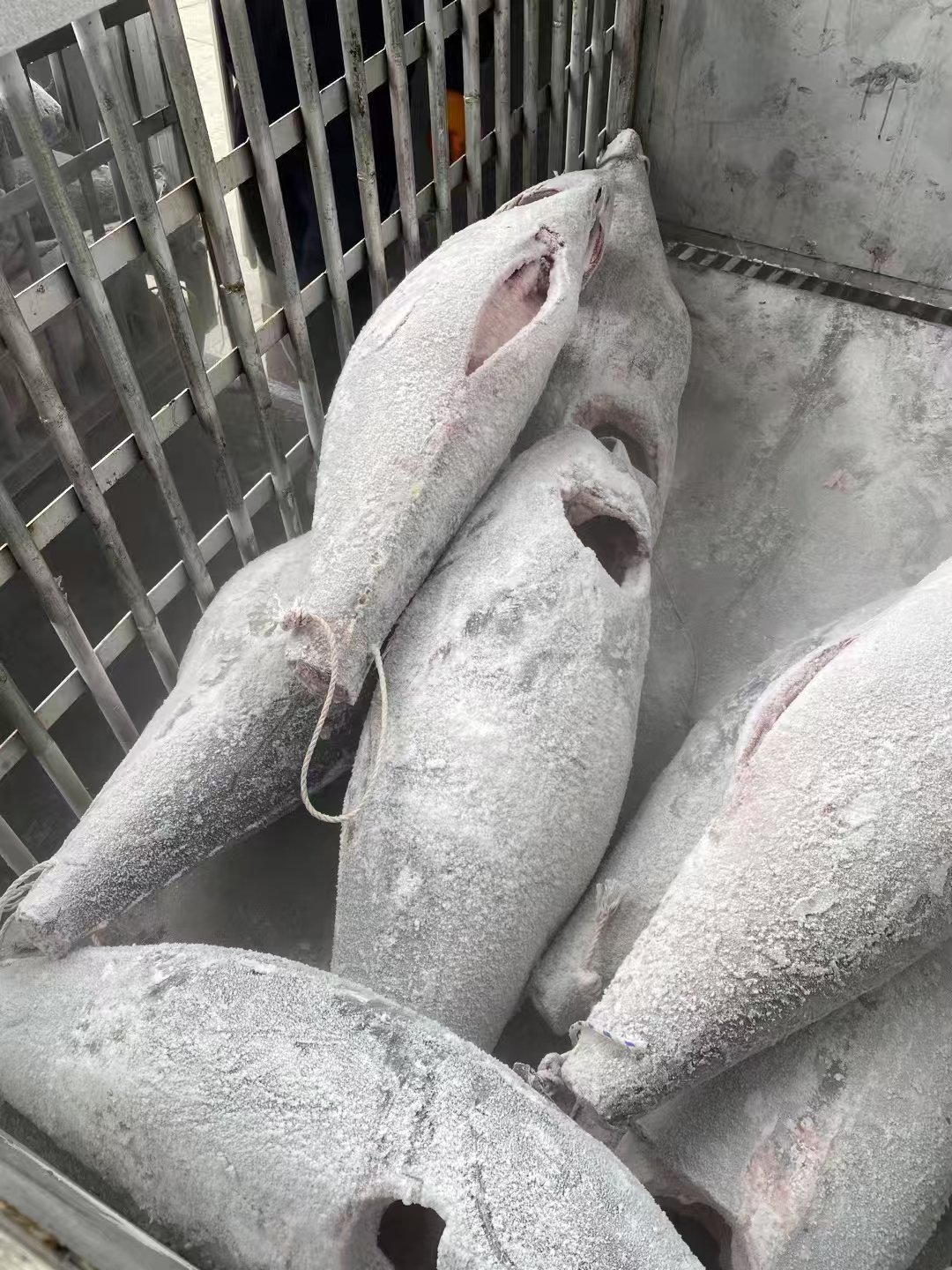
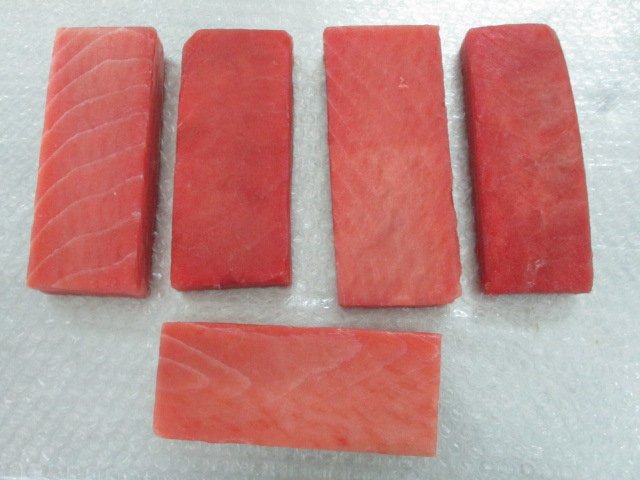
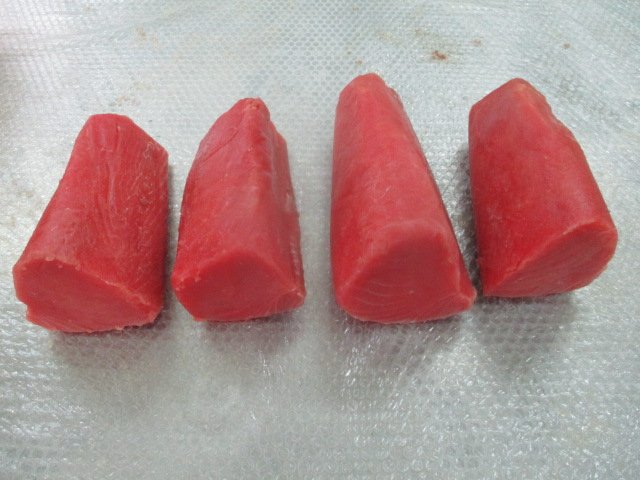
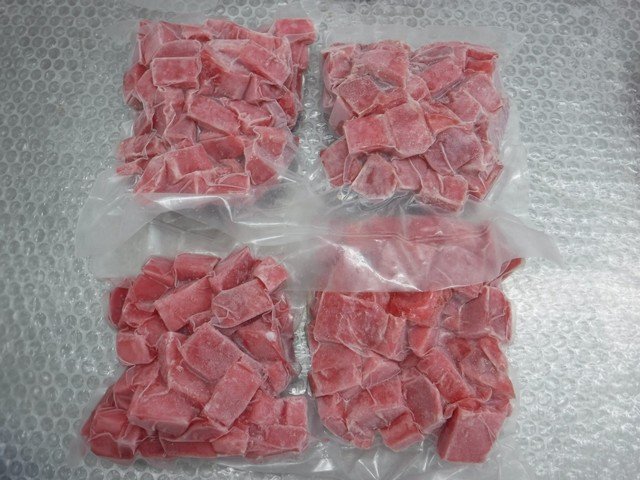
- Global common types: Frozen whole tuna (head-on/head-off), loins (Akami/Chutoro/Otoro), steaks, cubes; canned tuna (in oil/water); seasoned/smoked tuna.
- Country-specific products: Japan (tuna sashimi sets), Spain (bluefin loin vacuum packs), Thailand (Halal canned tuna), USA (pre-portioned tuna steaks), China (frozen tuna fillet, portion, steak, canned tuna), Vietnam (frozen tuna fillet, portion, steak, canned tuna).
2. All About Tuna
2.1 Background
2.2 Main Producer Countries (2024 FAO Data)
Country | Main Species | Annual Output | Global Share | Core Production/Processing Areas |
Japan | Pacific bluefin | 65,000 tonnes | 9% | Okinawa (fishing), Tokyo (processing) |
pain | Atlantic bluefin | 60,000 tonnes | 8% | Barcelona (fishing), Valencia (loins) |
USA | Bigeye/yellowfin | 85,000 tonnes | 11% | Hawaii (fishing), San Diego (processing) |
Ecuador | Yellowfin | 110,000 tonnes | 14% | Guayaquil (fishing), Manta (canning) |
Indonesia | Skipjack | 480,000 tonnes | 26% | Maluku (fishing), Jakarta (canning) |
Thailand | Mixed (processing) | 350,000 tonnes | 19% | Samut Sakhon (canned/seasoned tuna) |
Vietnam | Yellowfin/skipjack | 55,000 tonnes | 7% | Nha Trang (fishing), Ho Chi Minh (loins) |
China | Skipjack/yellowfin | 70,000 tonnes | 9% | Zhoushan (fishing), Xiamen (processing) |
2.3 Habitat and Biology
- Distribution Range:
- Japan/USA: Bluefin (Japan – Pacific; USA – Atlantic/Pacific), bigeye (USA – Hawaii waters, 200-500m depth).
- Spain: Atlantic bluefin (Mediterranean Sea, 10-25°C waters).
- Ecuador/Indonesia/Vietnam: Yellowfin (Ecuador – Galápagos; Vietnam – South China Sea; Indonesia – tropical Indo-Pacific), skipjack (Indonesia – year-round warm waters).
- China/Thailand: Skipjack (China – Western Pacific; Thailand – Gulf of Thailand), yellowfin (China – distant-water in Indian Ocean).
- Common Names:(新增各国本地名)Japan: “Maguro” (bluefin); Spain: “Atún rojo” (bluefin); USA: “Ahi” (yellowfin); Ecuador: “Atún aleta amarilla” (yellowfin); Indonesia: “Ikan cakalang” (skipjack); Thailand: “ปลาแทนนา” (tuna); Vietnam: “Cá ngừ” (tuna); China: “金枪鱼” (tuna).
- Morphological Characteristics/Growth/Adaptability:(标注各国品种特色)
- Japan bluefin: Largest (max 680kg), slow growth (10-year maturity); Spain bluefin: 200-300kg, 8-year maturity.
- USA bigeye: 100-150kg, deep-water adaptability (500m); Ecuador yellowfin: 50-80kg, fast growth (18 months).
- Indonesia skipjack: Smallest (3-10kg), 1-year maturity; Vietnam skipjack: 4-12kg, tolerance to low salinity (South China Sea).
- China skipjack: 5-15kg, farmed trials (experimental in Fujian); Thailand processed tuna: Focus on uniformity (canned chunks).
3. Fishing and Processing Techniques
3.1 Fishing Methods & Seasons
| Country | Main Species | Annual Output | Global Share | Core Production/Processing Areas |
| Japan | Pacific bluefin | 65,000 tonnes | 9% | Okinawa (fishing), Tokyo (processing) |
| pain | Atlantic bluefin | 60,000 tonnes | 8% | Barcelona (fishing), Valencia (loins) |
| USA | Bigeye/yellowfin | 85,000 tonnes | 11% | Hawaii (fishing), San Diego (processing) |
| Ecuador | Yellowfin | 110,000 tonnes | 14% | Guayaquil (fishing), Manta (canning) |
| Indonesia | Skipjack | 480,000 tonnes | 26% | Maluku (fishing), Jakarta (canning) |
| Thailand | Mixed (processing) | 350,000 tonnes | 19% | Samut Sakhon (canned/seasoned tuna) |
| Vietnam | Yellowfin/skipjack | 55,000 tonnes | 7% | Nha Trang (fishing), Ho Chi Minh (loins) |
| China | Skipjack/yellowfin | 70,000 tonnes | 9% | Zhoushan (fishing), Xiamen (processing) |
3.2 Processing (Country-Specific Clusters & Flow)
- Japan: Tokyo/Yokohama processing hubs; sashimi-grade bluefin flow – 0-4°C chilling → manual filleting (Otoro/Chutoro/Akami separation) → -60°C ultra-low freezing → vacuum packaging (with freshness date).
- Spain: Valencia loin processing; Atlantic bluefin – gutting → bone removal → loin trimming (uniform 5cm thickness) → glazing (3% ice) → -50°C storage.
- Thailand: Samut Sakhon canned tuna cluster; process – imported frozen skipjack → thawing → cooking → deboning → canning (in oil/water) → sterilization (121°C, 30 mins) → labeling (Halal logo).
- China: Xiamen/Zhoushan processing; skipjack – whole fish cleaning → freezing (-35°C) → block cutting (10kg/block) → packaging (for hot pot/restaurants).
- Vietnam: Ho Chi Minh small-batch processing; yellowfin – manual peeling → cube cutting (1cm) → seasoned (soy sauce) → quick-freezing → small packs (500g) for ASEAN.
- Quality Control Standards:
- Japan: K value ≤8% (sashimi), mercury ≤0.4mg/kg; USA: FDA histamine test (≤50ppm); EU (Spain/Ecuador): Regulation 1881/2006 (lead ≤0.1mg/kg).
- China: GB 10136-2025 (frozen tuna); Vietnam: VietGAP (antibiotic-free); Thailand: Halal certification (no pork-derived additives).
4. Market and Trade
4.1 Export Destinations by Country
- Japan: 70% domestic consumption, 30% exported to China (Hong Kong), South Korea (sashimi-grade bluefin).
- Spain: 60% to EU (Italy/France), 25% to USA, 15% to Middle East (bluefin loins).
- USA: 50% domestic (restaurants), 30% to Japan (bigeye), 20% to Canada.
- Ecuador: 40% to USA (canned yellowfin), 30% to EU, 20% to Latin America.
- Indonesia: 60% to Thailand (canned raw material), 20% to USA, 15% to China.
- Thailand: 50% to Middle East (Halal canned), 25% to ASEAN, 15% to Africa.
- Vietnam: 40% to EU (small-batch yellowfin), 30% to China, 20% to Japan.
- China: 60% domestic (hot pot/catering), 25% to Southeast Asia, 15% to Russia.
4.2 Trade Data (2024)
Country | Export Volume | Export Value | Key Product Price (2024) |
Japan | 19,500 tonnes | USD 2.1B | Bluefin Otoro: USD 180/kg |
Spain | 36,000 tonnes | USD 1.8B | Atlantic bluefin loin: USD 95/kg |
USA | 42,500 tonnes | USD 1.2B | Hawaii bigeye: USD 28/kg |
Ecuador | 66,000 tonnes | USD 1.1B | Yellowfin loin: USD 18/kg |
Indonesia | 288,000 tonnes | USD 2.5B | Skipjack (canned raw): USD 9/kg |
Thailand | 245,000 tonnes | USD 1.7B | Halal canned tuna: USD 3.5/can (185g) |
Vietnam | 27,500 tonnes | USD 0.4B | Yellowfin cubes: USD 15/kg |
China | 35,000 tonnes | USD 0.3B | Frozen skipjack (20kg): USD 8/kg |
4.3 Trade Challenges by Country
- Japan/Spain: Bluefin quota limits (ICCAT 2024: 32,000 tonnes global), high ultra-low temperature shipping costs (+30% vs regular frozen).
- USA/Ecuador: Anti-dumping duties (USA on Chinese tuna: 8-12%; EU on Ecuadorian canned: 5-7%).
- Indonesia/Vietnam: Logistics delays (Indonesia – port congestion; Vietnam – rainy season river transport).
- China/Thailand: Competition (China – from Indonesian skipjack; Thailand – from Indian Halal canned tuna).
5. Quality Safety and Certification
Government Supervision:
- Japan: Fisheries Agency of Japan (FAJ) implements “Tuna Traceability System” – each bluefin tuna is assigned a unique ID to track fishing vessel, catch time, and processing flow; annual inspections of 100% sashimi-grade facilities.
- USA: National Oceanic and Atmospheric Administration (NOAA) enforces “Dolphin-Safe Tuna” standards – vessels must submit GPS logs to prove no dolphin entanglement; FDA conducts random histamine testing (rejection rate ≤1%).
- China: General Administration of Customs (GAC) requires “Imported Tuna Raw Material Inspection” – all foreign raw materials (e.g., Indonesian skipjack) must pass heavy metal and pathogen tests before processing; domestic processors must obtain SC food production licenses.
- Vietnam: Ministry of Agriculture and Rural Development (MARD) issues “Tuna Export Certificates” – farms/fleets must meet VietGAP standards (antibiotic-free, water quality monitoring); 50% of export batches undergo third-party testing.
- Thailand: Department of Fisheries (DOF) supervises Halal processing – canned tuna plants must have Muslim auditors on-site to ensure compliance with Islamic dietary laws; annual Halal recertification.
International Certifications:
Country | Main Certifications | Application Scope |
Japan | JAS, MSC | Sashimi-grade bluefin (100% JAS-certified) |
Spain | MSC, EU Organic, ISO 22000 | Atlantic bluefin loins (60% MSC-certified) |
USA | MSC, Dolphin-Safe, USDA Organic | Hawaii bigeye (80% Dolphin-Safe) |
Ecuador | MSC, BAP (Best Aquaculture Practices) | Yellowfin (40% MSC-certified) |
Indonesia | MSC, ISO 9001 | Skipjack (30% MSC-certified for exports) |
Thailand | Halal, MSC, ISO 22000 | Canned tuna (90% Halal-certified) |
Vietnam | VietGAP, MSC | Yellowfin cubes (25% MSC-certified) |
China | SC, MSC, ISO 22000 | Frozen skipjack blocks (50% SC-certified) |
6. Nutritional Value
Nutritional value of tuna products from core countries (per 100g edible part, raw):
Nutrient Indicator | Japan Bluefin (Otoro) | Spain Bluefin (Loin) | USA Bigeye | Ecuador Yellowfin | Indonesia Skipjack | Thailand Canned (in water) | Vietnam Yellowfin (Cube) | China Skipjack (Block) |
Calories | 250 kcal | 205 kcal | 148 kcal | 144 kcal | 135 kcal | 110 kcal | 142 kcal | 138 kcal |
Total fat | 18g | 12g | 4.2g | 4g | 3g | 2g | 3.8g | 3.2g |
Saturated fat | 6g | 4g | 1.1g | 1g | 1g | 0.8g | 0.9g | 1g |
Protein | 20g | 22g | 29g | 29g | 28g | 26g | 28.5g | 28g |
Omega-3 fatty acids | 3.5g | 2.8g | 1.3g | 1.2g | 1.0g | 0.8g | 1.1g | 1.0g |
Mercury (μg/kg) | 350 | 320 | 280 | 250 | 200 | 180 | 240 | 210 |
Selenium (μg) | 50 | 48 | 45 | 45 | 42 | 38 | 44 | 43 |
- Japan’s bluefin (Otoro) has the highest fat and Omega-3 content, suitable for high-end sashimi;
- Indonesia/China skipjack has the lowest fat and mercury, ideal for children and elderly consumers;
- Thailand’s canned tuna (in water) has lower calories due to oil removal, popular in weight-loss diets;
- USA bigeye balances nutrition and safety (low mercury + high protein), favored by health-conscious markets.
7. Sustainable Development and Social Impact
7.1 Sustainable Fishing Practices
- Japan: Implements “Bluefin Tuna Spawning Protection” – bans fishing in Okinawa spawning grounds (April-June); funds artificial propagation research (2024: 10,000 juvenile bluefin released).
- Spain: Adopts “Longline Bycatch Reduction” – uses circle hooks (reduces sea turtle bycatch by 70%); participates in ICCAT quota management (2024: 10% reduction in Atlantic bluefin catch).
- USA: Promotes “Dolphin-Safe Fisheries” – requires all purse seine vessels to install underwater cameras; supports MSC certification (2024: 80% of Hawaii bigeye meets MSC standards).
- China: Launches “Skipjack Fishery Restructuring” – reduces distant-water fleet capacity by 15% (2023-2025); invests in RAS (Recirculating Aquaculture Systems) for experimental skipjack farming (Fujian pilot).
- Indonesia: Protects “Skipjack Spawning Grounds” – establishes marine protected areas (MPAs) in Maluku waters; limits small-scale fleet catch (5 tonnes/vessel/week) to prevent overfishing.
7.2 Social Impact
- Employment Contribution (2024 Data):
Country | Tuna Industry Jobs | Job Distribution | Average Monthly Salary (USD) |
Japan | 50,000 | Processing (60%), Fishing (25%), Trade (15%) | 3,500 |
Spain | 40,000 | Fishing (40%), Processing (35%), Logistics (25%) | 2,800 |
USA | 35,000 | Fishing (20%), Restaurants (50%), Trade (30%) | 3,200 |
Ecuador | 80,000 | Fishing (30%), Canning (50%), Logistics (20%) | 1,200 |
Indonesia | 300,000 | Fishing (60%), Canning (30%), Trade (10%) | 500 |
Thailand | 150,000 | Canning (70%), Trade (20%), Logistics (10%) | 700 |
Vietnam | 45,000 | Fishing (40%), Processing (45%), Trade (15%) | 800 |
China | 70,000 | Processing (50%), Fishing (30%), Trade (20%) | 1,500 |
- Community Development:
- Maldives (linked to USA/Ecuador yellowfin trade): Tuna fishing supports 40% of coastal households – USA buyers invest in local cold storage facilities, reducing post-harvest loss by 30%.
- Indonesia: Canning plants in Jakarta provide free vocational training (10,000 workers/year), improving employment rates in low-income areas.
- China: Zhoushan tuna processing clusters drive local logistics growth – 20+ cold chain companies established, creating 5,000+ supporting jobs.