
Helping you import competitive Frozen Mussel
Mussel Material Price Trend
China Mussel Raw Material Price Trend (As of November 3, 2026)
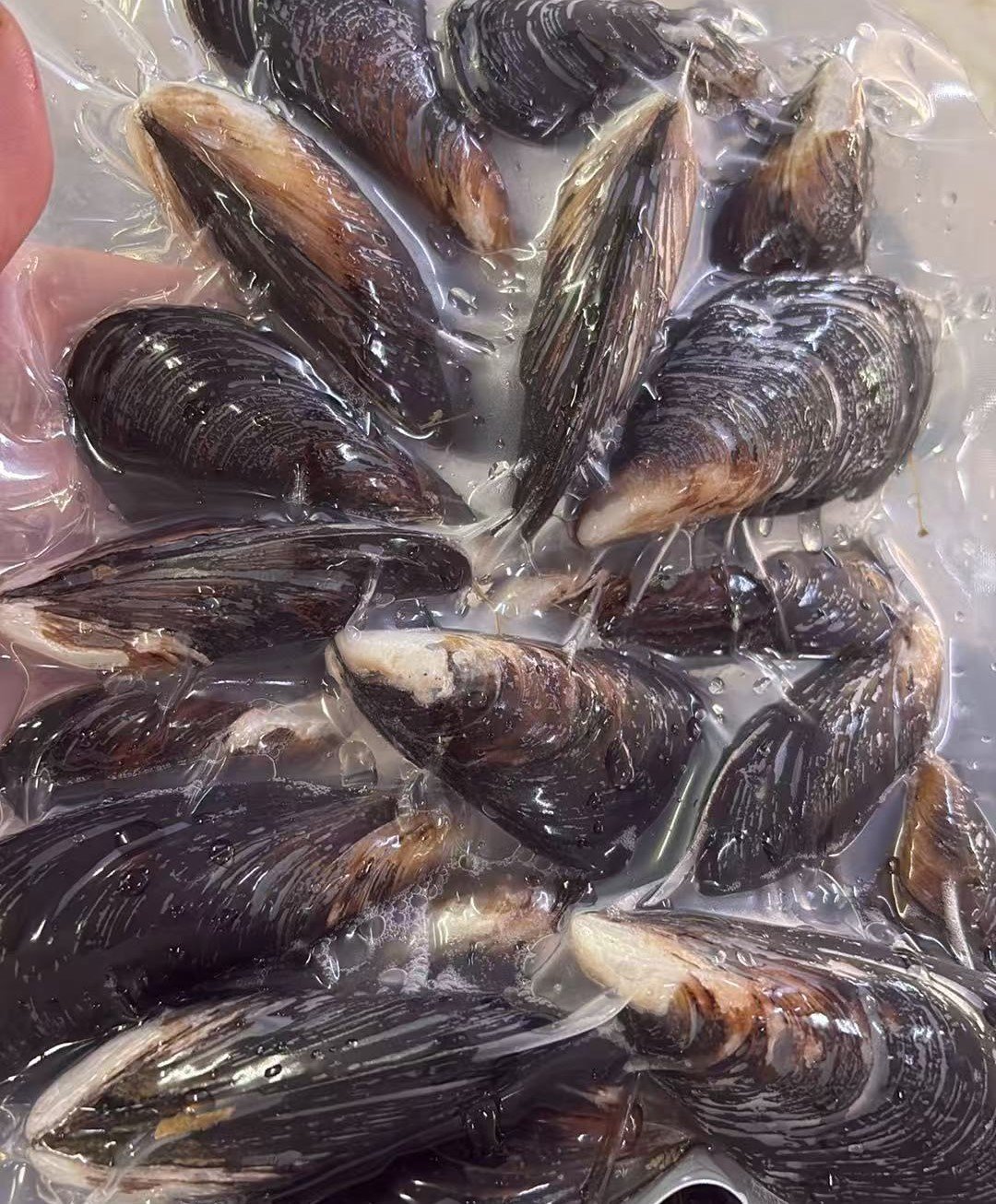
Mussel raw material prices in China are generally stable to slightly softer following the peak harvesting and marketing season in September and October. In Shengsi, Zhejiang, one of China’s major thick-shell mussel production areas, output increased significantly in the first half of 2026, indicating relatively sufficient supply. This may limit further price increases.
Prices vary depending on species, shell size, meat yield, quality and origin. Shandong and Zhejiang suppliers may also quote differently. Overall, the market currently shows no clear evidence of a sharp nationwide price increase. Buyers may have some room to negotiate, particularly for bulk purchases and regular supply programs.
All About Mussel
1. Introduction to Mussel Aquaculture
Mussels are important farmed bivalve shellfish in global aquaculture. As filter-feeding shellfish, mussels obtain nutrients mainly from natural phytoplankton and suspended organic particles in seawater.
Unlike many farmed fish and shrimp, mussels generally do not require formulated feed during their grow-out period. This makes mussel farming a relatively low-input and environmentally friendly form of marine aquaculture.
China is one of the world’s major mussel-producing countries, with established farming and processing industries along its eastern and northern coastlines.
Two important mussel sourcing regions in China are Zhejiang Province, particularly Zhoushan and Shengsi, and Shandong Province, including coastal areas around Rizhao and Yantai.
These regions offer different commercial mussel varieties, raw material characteristics and processing options, providing international buyers with flexible sourcing choices.
2. Main Mussel Species in China
Two commercially important mussel species are particularly relevant to Chinese mussel farming and processing.
Mytilus galloprovincialis (Lamarck, 1819)
Common names: Mediterranean Mussel / Purple Mussel
Family: Mytilidae
The Mediterranean mussel, also known as the purple mussel, is an important commercial mussel species cultivated in different parts of the world, including China.
It is commonly used in frozen seafood processing because of its commercial availability and suitability for different product forms.
Depending on the raw material and factory processing capabilities, it can be processed into:
Cooked half-shell mussels.
Frozen mussel meat.
Whole-shell mussels.
IQF mussel products.
Mytilus coruscus (Gould, 1861)
Common names: Chinese Thick-shell Mussel / Hard-shell Mussel
Family: Mytilidae
The Chinese thick-shell mussel is a characteristic mussel species associated with Zhejiang Province, particularly Zhoushan and Shengsi.
It is known for its relatively thick and strong shell, distinctive appearance and firm meat texture.
Shengsi thick-shell mussels are an important local aquaculture product and offer a differentiated sourcing option for international buyers looking for Chinese mussels.
They can be processed into whole-shell mussels, half-shell mussels and mussel meat, depending on raw material size and factory capabilities.
3. Background of Chinese Mussel Farming
Mussel aquaculture has developed over several decades along China’s coastline.
Hanging culture and raft-based farming are widely used in suitable coastal waters.
Shandong has an established mussel farming and seafood processing industry, supplying raw materials for large-volume frozen mussel production.
Zhejiang, especially Zhoushan and Shengsi, is well known for its thick-shell mussel farming industry.
Mussel farming depends heavily on the surrounding marine environment. As filter feeders, mussels obtain nutrients by filtering seawater. Therefore, water quality, farming density and harvesting conditions are important factors affecting mussel growth, flavor and food safety.
Proper farm management includes monitoring farming areas, controlling cultivation density and following applicable harvesting and food safety requirements.
4. Main Mussel Producing Regions in China
Zhejiang – Zhoushan and Shengsi
Zhoushan is one of China’s important marine aquaculture and seafood processing regions.
Shengsi County is particularly well known for its thick-shell mussel industry.
The main commercial species of interest is Mytilus coruscus.
Mussels are commonly cultivated using suspended ropes and offshore raft systems. Compared with some other commercial mussel varieties, thick-shell mussels generally require a longer growing period to reach commercial harvesting size.
Main product options:
Frozen whole-shell thick-shell mussels.
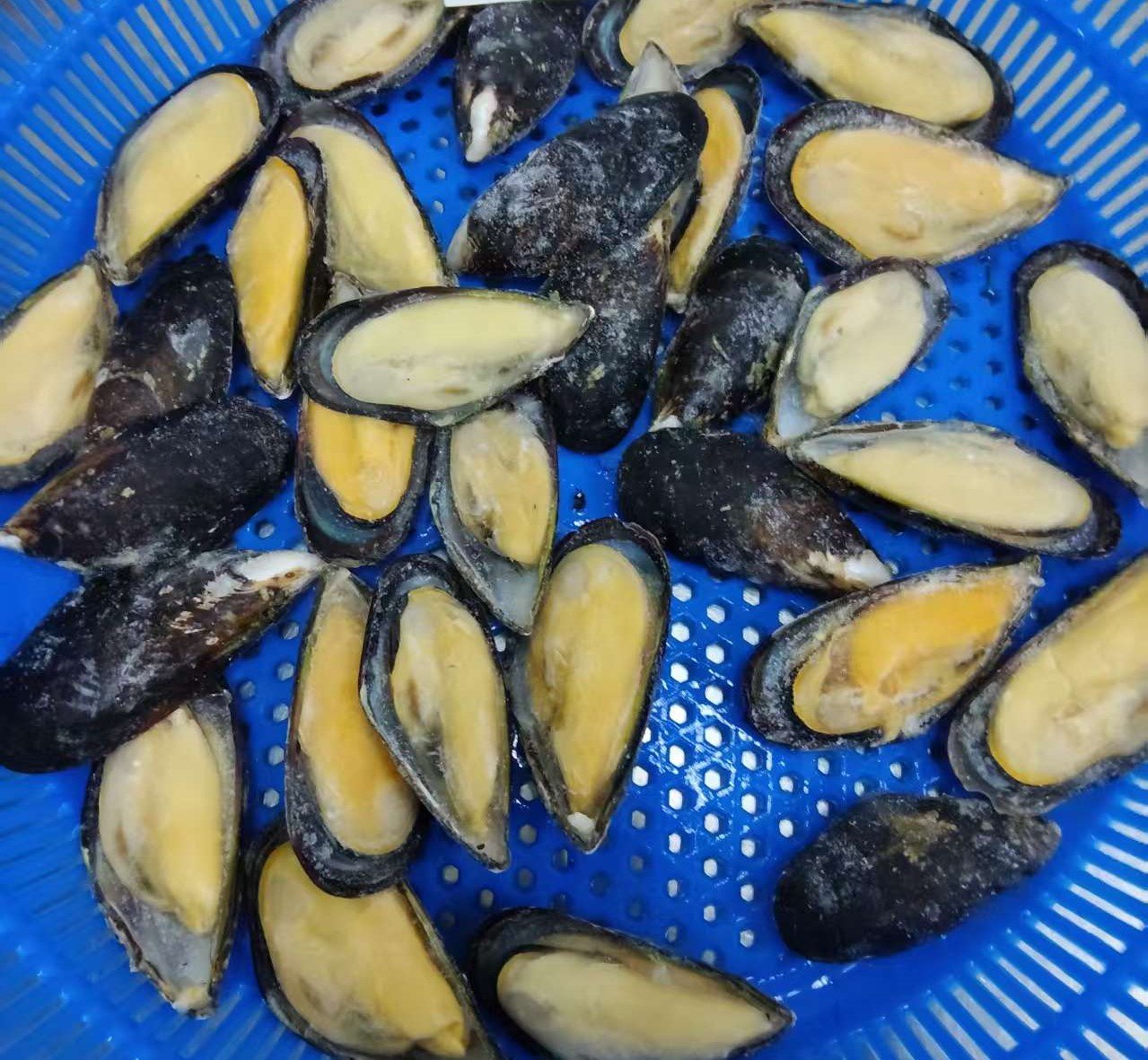
Frozen cooked half-shell mussels.
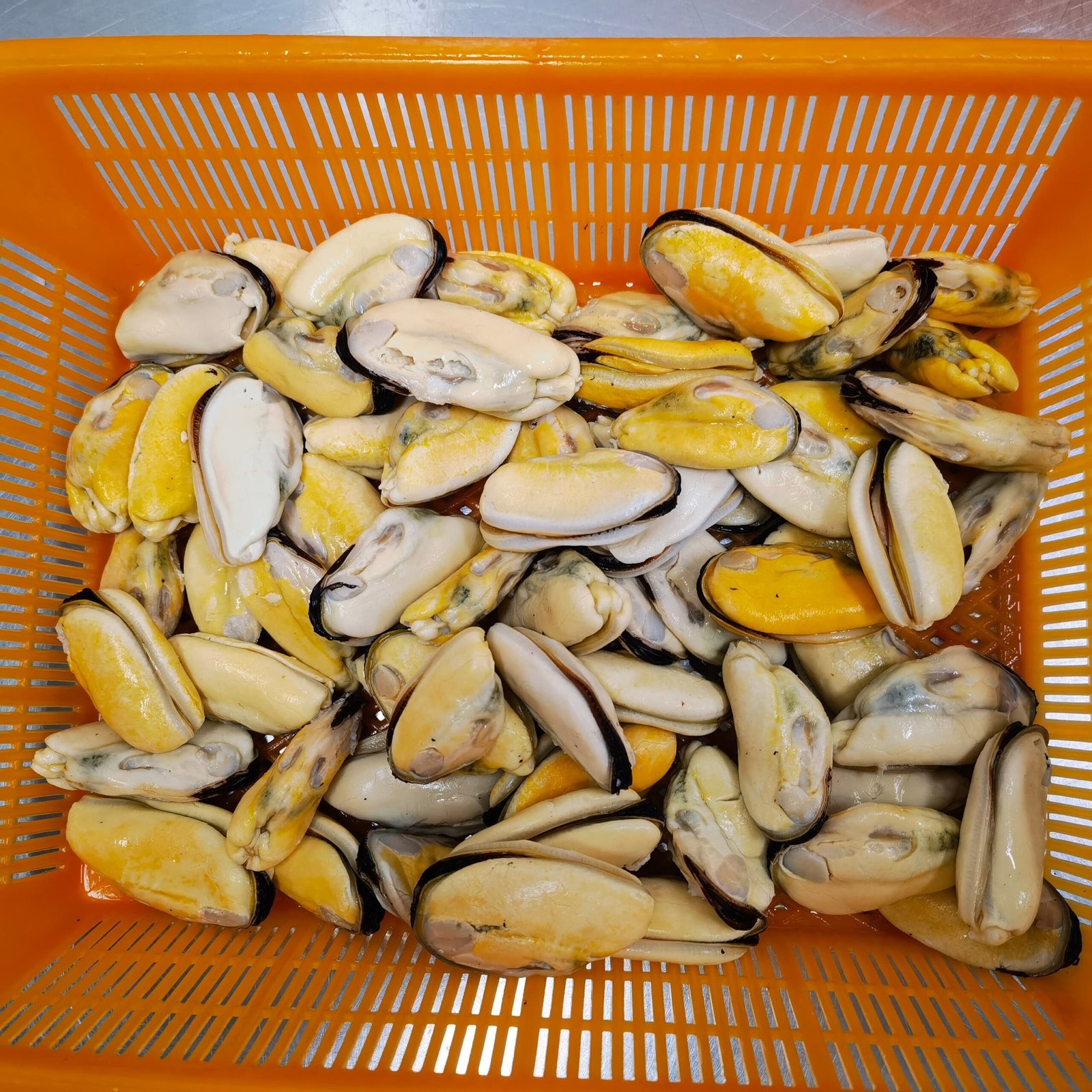
Frozen thick-shell mussel meat.
Other customized frozen mussel products.
Zhoushan is an attractive sourcing region for importers looking for Chinese thick-shell mussels and differentiated seafood products.
Shandong – Rizhao and Yantai
Shandong is an important seafood production and processing province in northern China.
Coastal cities such as Rizhao and Yantai have established marine aquaculture and seafood processing industries.
Purple mussels and other commercially farmed mussels are available from this region, with the actual species depending on the farming area and raw material source.
Shandong offers sourcing opportunities for large-volume frozen mussel products, particularly:
Frozen cooked mussel meat.
IQF mussel meat.
Frozen half-shell mussels.
Block-frozen mussel meat.
Customized mussel products for food processing factories.
With established processing facilities and seafood export infrastructure, Shandong is an important sourcing option for international seafood importers.
5. Mussel Farming Methods
Hanging Rope Culture
Hanging rope culture is a common method of mussel farming.
Young mussels attach to ropes or are transferred onto cultivation ropes. These ropes are suspended from floating rafts or long-line structures in suitable marine areas.
As mussels grow, farmers manage rope density and cultivation conditions to reduce overcrowding and improve growth.
Long-line and Raft Culture
In long-line and raft systems, cultivation ropes are suspended beneath floating structures.
This system makes use of available seawater resources and allows farmers to manage mussel cultivation over larger marine areas.
Natural Feeding
Mussels are filter-feeding shellfish. They mainly obtain nutrition from naturally occurring phytoplankton and suspended organic particles in seawater.
Unlike conventional fish farming, mussel aquaculture generally does not require artificial feed during normal grow-out.
This relatively low-input farming method is one of the advantages of mussel aquaculture.
6. Mussel Production Cycle
Commercial mussel farming generally includes several stages.
6.1 Spat Collection
Young mussels, known as spat, are collected from natural settlement areas or produced through appropriate hatchery and nursery systems.
6.2 Nursery Stage
Young mussels are transferred to suitable cultivation ropes or structures. Farmers manage their density as they grow.
6.3 Grow-out Stage
Mussels remain suspended in marine farming areas until they reach commercial harvesting size.
The growing period depends on species, water temperature, food availability, cultivation density and local farming conditions.
As a general industry reference:
Shandong commercial purple mussels: approximately 12–18 months.
Zhoushan thick-shell mussels: approximately 24–36 months.
These are indicative growing periods rather than fixed production schedules. Actual harvesting time varies according to local farming conditions.
6.4 Harvesting
Mussels are harvested when they reach the required commercial size and meat condition.
The harvesting schedule depends on local farming conditions, seasonal changes and market demand.
6.5 Transportation to Processing Plants
Freshly harvested mussels are transported to processing facilities for washing, sorting, cooking or blanching and freezing.
7. Frozen Mussel Products and Processing Forms
Chinese mussels can be processed into different frozen products according to market demand and customer specifications.
Frozen Half-shell Mussels – Cooked IQF
Mussels are cooked and processed with one shell removed, leaving the meat attached to the remaining half shell.
The products are individually quick frozen to keep the pieces separate.
Common commercial shell-size categories may include:
6–8 cm.
7–9 cm.
8–10 cm.
Actual sizes depend on the origin, species and factory grading standards.
Applications:
Retail frozen seafood.
Restaurants and catering businesses.
Grilled mussels.
Oven-baked and steamed seafood dishes.
Frozen Whole-shell Mussels – IQF
Whole mussels retain both shells and can be supplied raw or cooked, depending on factory processing capabilities.
They are graded according to shell length and packed for frozen seafood distribution.
Applications:
Seafood wholesalers.
Restaurants and catering.
Seafood platters.
Retail frozen seafood.
Frozen Mussel Meat – Cooked IQF
Mussel meat is removed from the shells, cooked or blanched as required, and individually quick frozen.
This product is convenient for food processing and catering applications.
Applications:
Seafood mixes.
Pasta and seafood sauces.
Seafood salads.
Soups and ready meals.
Food manufacturing.
Blanched/Cooked Mussel Meat – IQF / BQF
Mussel meat is lightly heat-treated before freezing.
It can be supplied individually quick frozen or block frozen, depending on customer requirements and factory capabilities.
BQF products are particularly suitable for industrial food processing and large-volume orders.
Breaded Mussel Meat
Breaded mussel meat is a value-added seafood product made by coating mussel meat with batter or breadcrumbs.
It is suitable for further frying and foodservice applications.
Availability depends on the processing plant.
Understanding IQF, BQF and Glazing
IQF – Individually Quick Frozen
Each mussel or piece of mussel meat is frozen separately. This makes it easier for buyers to handle individual portions and control usage.
BQF – Block Quick Frozen
Mussels are frozen together in blocks. This format is suitable for industrial food processing and large-volume buyers.
Glazing
A protective layer of ice is applied to frozen products to help protect them during frozen storage and transportation.
Glazing percentages should be agreed upon according to buyer specifications and product requirements.
8. How Are Fresh Mussels Processed into Frozen Products?
The processing method varies according to the final product, but a typical frozen mussel production flow includes the following stages:
Fresh Harvested Mussels
↓
Raw Material Inspection
↓
Washing and Removal of Impurities
↓
Sorting and Size Grading
↓
Cooking or Blanching
↓
Shell Removal (For Mussel Meat Products)
↓
Meat Trimming and Foreign Material Inspection
↓
Final Washing
↓
IQF or BQF Freezing
↓
Glazing (According to Product Specifications)
↓
Metal Detection
↓
Packing and Weight Checking
↓
Cold Storage at -18°C or Below
Important Processing Details
Raw Material Inspection
Check shell condition, freshness, raw material appearance and applicable batch testing documents.
Cooking and Blanching
Heat treatment is carried out according to the product specification and validated processing requirements.
Shell Removal
For shell-off products, mussel meat is separated from the shells and checked for remaining shell fragments.
Freezing
IQF freezing keeps individual mussel pieces separate, while BQF freezing produces solid blocks suitable for further industrial processing.
Glazing
An ice coating may be applied to protect frozen mussels during storage and transportation. The glazing percentage should be agreed upon in the product specification.
Metal Detection and Packing
Finished products pass through the factory’s applicable foreign-material control procedures before final packing.
9. International Markets for Chinese Mussels
Frozen mussels are widely used in international seafood markets, particularly in retail, foodservice and industrial food processing.
Different markets have different product preferences and import requirements.
European Market
European buyers commonly purchase cooked half-shell mussels, whole-shell mussels and frozen mussel meat.
Applications include retail frozen seafood, restaurants, seafood platters and prepared meals.
However, there is an important import restriction for Chinese-origin mussels.
Under the current EU country authorization framework, China is not approved for the import of live, chilled, frozen or processed bivalve molluscs for human consumption. Therefore, Chinese-origin mussel products cannot currently be directly imported into the EU under the existing authorization framework.
See the detailed explanation in Section 10 below.
Russia and Eastern Europe
Frozen mussel meat and half-shell mussels are suitable for wholesale distribution, catering and food manufacturing.
Bulk packaging and competitive prices are important factors for importers.
Asian Markets
Markets such as Japan, South Korea and Southeast Asia use both shell-on mussels and shell-off mussel meat.
Products are used in hot pots, soups, seafood dishes, restaurants and processed foods.
Middle East and North Africa
Frozen cooked mussel meat and shell-on mussels can be used by foodservice distributors, restaurants and seafood processing businesses.
North American Market
Frozen mussel meat and cooked half-shell mussels are used in retail, foodservice and industrial food manufacturing.
Importers should pay particular attention to applicable food safety regulations, seafood HACCP requirements and traceability documentation.
All market access is subject to the destination country’s current import authorization requirements.
10. EU Import Restrictions on Chinese Mussels
Can Chinese Mussels Be Imported into the European Union?
Currently, China is not included in the European Union’s approved country list for the import of live, chilled, frozen or processed bivalve molluscs intended for human consumption.
According to Article 12 and Annex VIII of Commission Implementing Regulation (EU) 2021/405, bivalve molluscs intended for human consumption can only enter the EU when they originate from countries or regions authorized under the relevant list.
As China is not included in Annex VIII, Chinese-origin mussel products are currently not authorized for direct import into the EU for human consumption.
This restriction applies to different Chinese mussel products, including:
Frozen mussel meat.
Cooked half-shell mussels.
Frozen whole-shell mussels.
IQF mussel products.
Other processed mussel products.
Removing the shell, cooking the mussels, freezing them or repacking them does not automatically remove the country authorization requirement.
Why Are Chinese Mussels Subject to This Restriction?
Bivalve molluscs are filter-feeding shellfish that obtain nutrients by filtering seawater.
Their food safety is closely associated with the quality of harvesting waters and the effectiveness of monitoring and control systems.
Potential food safety concerns include:
Marine biotoxins caused by harmful algal blooms.
Microbiological contamination.
Heavy metals and other environmental contaminants.
Harvesting area monitoring and product traceability.
The EU applies specific country-level approval and food safety control requirements to imported bivalve molluscs.
What About Other Seafood Products from China?
It is important to distinguish between general fishery products and bivalve molluscs.
China’s authorization for certain fishery products does not automatically mean that Chinese mussels, oysters, clams or other bivalve shellfish are authorized for EU import.
Different seafood categories have different import authorization requirements.
Advice for International Mussel Buyers
For importers sourcing frozen mussels from China, it is important to confirm the destination country’s import requirements before placing an order.
Leo Seafood focuses on sourcing Chinese mussel products for markets where the relevant country, product and processing plant meet applicable import requirements.
For EU buyers, we recommend checking the latest European Commission approved-country list and applicable import conditions before making purchasing decisions.
Regulatory reference: Commission Implementing Regulation (EU) 2021/405, Article 12 and Annex VIII.
Note: EU import authorization requirements may change. Buyers should verify the latest regulations before shipment.
11. Quality Control and Food Safety
Because mussels are filter-feeding shellfish, controlling the quality of farming waters and raw materials is particularly important.
Marine biotoxins, microbiological contamination and chemical contaminants must be properly controlled through appropriate monitoring and testing procedures.
For frozen mussel products, important quality control procedures may include:
Raw material origin and harvest information.
Raw material freshness and appearance inspection.
Applicable marine biotoxin testing.
Heavy metal and chemical contaminant testing according to market requirements.
Microbiological testing.
Processing hygiene and temperature control.
Freezing and cold-storage management.
Metal detection and foreign material control.
Finished product inspection and batch traceability.
Processing plants may implement HACCP and other food safety management systems, depending on their certifications and export approvals.
Specific certificates, laboratory reports and export documents can be provided according to the product, factory and destination market.
12. Why Import Frozen Mussels from China Through leoseafood.com?
Multiple Sourcing Regions
We help buyers source different mussel varieties from Zhejiang Zhoushan and Shandong, according to their market requirements.
Different Mussel Varieties
From Zhoushan thick-shell mussels to Shandong commercial mussel products, we help customers identify suitable raw material sources.
Flexible Product Specifications
Different product forms, sizes, cooking methods, freezing methods, packaging and glazing rates can be discussed according to customer requirements and factory capabilities.
Competitive Purchasing
Our local sourcing relationships help us connect with suitable farms and processing plants, allowing us to compare different sourcing options and find competitive offers.
Quality Control
Our experienced QC team focuses on raw material inspection, production follow-up, finished product specifications and packaging checks.
Export Experience
We understand the requirements of international frozen seafood buyers and help coordinate sourcing, production, documentation and shipping arrangements.
Looking for a Reliable Frozen Mussel Supplier in China?
Whether you are looking for premium Chinese thick-shell mussels from Zhoushan or competitive frozen mussel products from Shandong, Leo Seafood can help you find suitable sourcing options.
Contact us with your required product form, size, packing, quantity and destination port.
We will help you find the right Chinese mussel products at competitive prices.
Contact leoseafood.com for a Frozen Mussel Quotation Today!